Is a Modular Home a Cost-Effective Alternative to Traditional Builds?
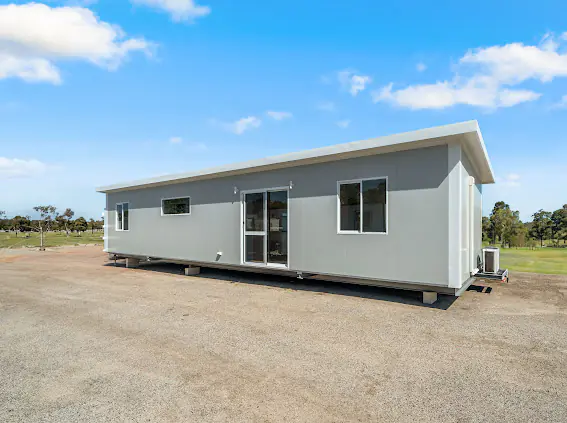
For home buyers looking for a quality residential home with a clear starting price, a modular home can be a practical solution.
Modular homes from Auswest Modular Homes are constructed off-site in Western Australia, so much of the construction is finished in a factory-type setting.
The building process is not affected by weather delays or other issues, making modular homes a good cost-saving option.
Auswest Modular Homes offers a range of standard floor plans with prices starting from $99,000, including GST. The current range includes 1-bedroom, 2-bedroom, 3-bedroom, and 4-bedroom homes, giving buyers options to suit different household sizes and budgets.
However, the cost of the actual dwelling isn’t everything. As a potential buyer, you should investigate ALL costs, including the land, the concrete slab or pad, transportation costs, retaining walls (if required), installation, and utility connections.
Be sure to add any upgraded finishes or other upgrades (such as solar panels) to your final price to ensure that you are comparing apples to apples.
Many people find that modular construction costs are lower than traditional construction.
Quality and Compliance Matter When Comparing Prices
When comparing the pricing of a modular home to a traditional home, the lowest advertised price is not always the best value.
For example, one modular construction company may be less expensive, but they didn’t include everything in the price list, such as kitchen cabinetry or flooring options.
It’s important to consider the final cost of your chosen modular home, including transportation charges, utility connections, building materials used, and overall quality.
Also remember that construction details make a difference!
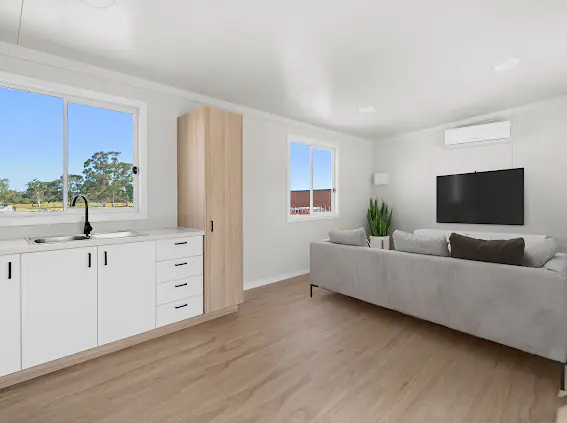
Auswest uses EPS modular construction and fibre-cement flooring, rather than cheap chipboard. Other features include architraves, skirting boards, and tiled (not fiberglass) shower areas.
Many modular home costs that you see advertised often only list the base price of the modular unit itself, which isn’t the complete picture. What you might see as cost savings could actually mean excluded features that are important to you.
Looking beyond the large-type headline price can help buyers make a more informed decision.
Is Modular Better than Prefab?
Modular and prefab homes are often considered two different types of buildings, but the two phrases frequently overlap.
“Prefab” is, of course, short for “prefabricated” and often refers to sections that are built in a factory before being “put together” on site.
Modular homes are also “prefab” in that they are constructed in a controlled factory environment. However, modular homes are nearly complete and, when finished, are ready to be transported to your property, with no further “construction” required.
Rather than asking which one is better, you can look at the overall quality of the structure and what is included in the base price.
Whether you call it a modular home or a prefab home, in the end, it’s the higher quality materials, overall construction, the standard of inclusions, available floor plans, and delivery costs that make the difference.
What is the Cheapest Type of Home to Build in Australia?
There is no permanently “cheapest” type of home in Australia. Costs vary depending on material availability and popularity.
Fibrosheeting, for example, was once an extremely inexpensive way to construct a home post-WWII. Unfortunately, Fibro produced in the 1950s contained asbestos. Fibrosheeting today uses non-asbestos fibre cement ingredients, which make the panels durable but also costly.
Modular homes are a cost-effective option because most of the construction takes place in a factory. This streamlined building approach allows buyers to pick and choose exactly what they want (or don’t want), choose selected floor plans, and enjoy standard specifications that often cost more with traditional builds.
For those interested in an affordable new home, a smaller modular home with standard specifications may provide a practical way to control construction costs.
In the end, the best option will ultimately depend on the homeowner’s budget, property, and transport distance.
What Determines the Cost of a Modular Home?
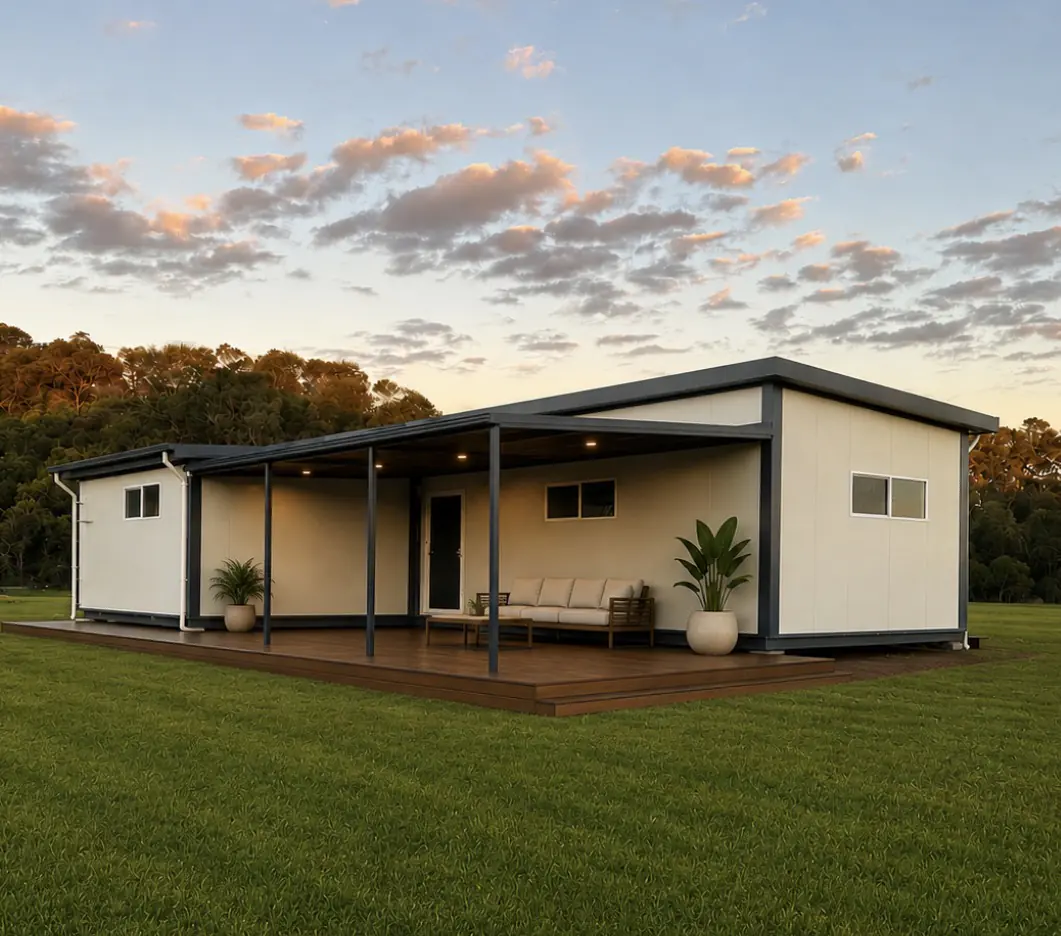
Many people see the bold headline price of modular homes and think, “Wow! What a bargain!” without considering ALL costs involved.
Some of the items new buyers should consider and include in the total budget:
- Size and design
- Materials and finishes
- Site preparation costs
- Foundation and installation
- Connections and external work
- Building location
- Added upgrades
This is why it’s important to look at the final cost, rather than the advertised price of the building itself.
How Does Home Size, Bedrooms, and Layout Affect the Price
Obviously, a larger home means the cost will increase because it requires more materials and higher labour costs. However, the number of bedrooms does not always determine the final cost.
For example, a compact three-bedroom home with a simple, efficient layout may cost less than a larger two-bedroom home with spacious living areas, multiple bathrooms, upgraded finishes, custom details, and other extensive upgrades.
The overall floor area is more important in determining final cost than the number of bedrooms. You will also incur additional costs for more bathrooms or larger living spaces.
The layout can also make a significant difference. A straightforward rectangular design is generally easier and more economical to manufacture and install than a home with complicated angles, multiple sections, long hallways, or other architectural features.
What is Usually Included in the Modular Home Price?
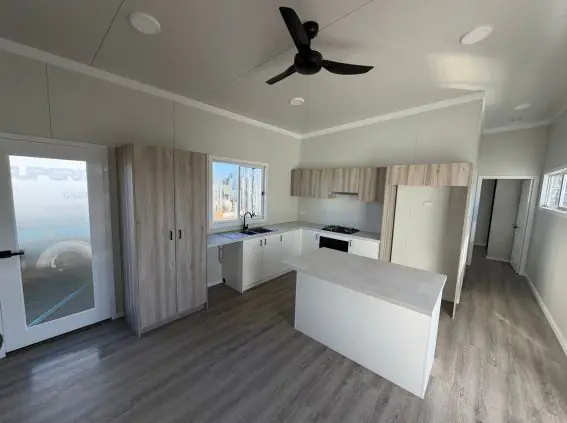
The items included in modular homes vary greatly from one manufacturer to another, so don’t let the headline price fool you.
For example, one builder offers the smallest modular home for $89,000, but the same size home from another modular home builder may cost $100,000. You might be tempted to go right to the cheaper option, until you discover that the $89,000 price does not include kitchen cabinets, has chrome fittings (and you want black), and has no window screens!
In this case, the $100,000 home includes all the items missing from the less expensive home, making it the better buy of the two.
Some modular home builders include transportation costs or installation costs; others do not.
If a builder advertises the modular building as “turnkey”, you should check into exactly what you are getting.
Ask the builder for a detailed list of included and excluded items. They should also provide you with a full list, including costs of upgrades, such as carpet, solar systems, or ceiling fans.
Only start comparing pricing after you have a complete list of inclusions (and exclusions) and upgrades you might want to add.
What Extra Costs Should You Budget for Beyond the Home Price?
The advertised price of a modular home is rarely the amount you will spend in the end. Depending on the builder, your site, and location, you might need to add the following to your budget:
- Site preparation
- Foundation costs
- Transport distance
- Crane and installation
- Utility connections
- Council and approval costs
- External works (such as driveways, fences, retaining walls, paths, decks)
- Difficult site conditions (such as steep sites, remote locations, or restricted access)
Of course, not every home cost will include or require the above, but these are some factors you will need to consider.
Site Preparation, Footings, and Utility Connections
Before your new modular home can be installed, the property needs to be ready to accept it.
This includes site work, such as clearing, leveling the site, excavation, drainage, and installing appropriate foundations or footings.
Your home will also need to be connected to services such as water, electricity, sewage, or a septic system. These connections may require professional electricians or plumbers.
Some modular homes include these in the costs; others do not. To avoid unpleasant surprises or unmet expectations in your home journey, always check what is included beforehand.
Transport, Cranage, and Installation Costs
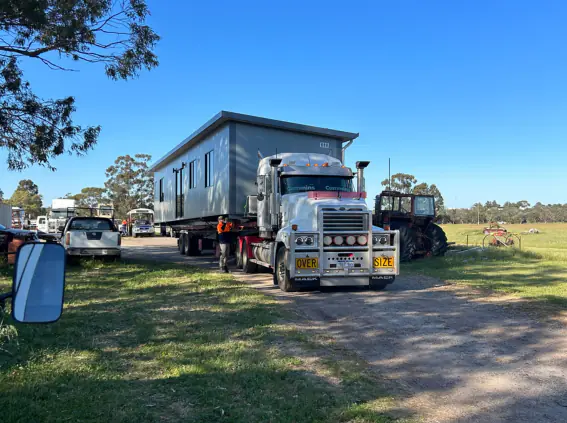
Once your modular home is constructed and transported to the building site, a crane is most often used to lift the modules from the truck to the foundation.
While cranage isn’t always required, it is usually the best way to place your home in its final location.
Transport costs can vary depending on the distance from the factory, the number of modules moved, and site access.
These costs can be much more than people expect. Transport expenses to rural areas, site prep costs, and crane fees can turn your dream home into a nightmare of unexpected charges!
Council Approvals, Site Surveys, and BAL Requirements
Like traditionally built homes, modular designs still need to meet planning, permissions, and building requirements.
Depending on the location you’ve chosen, you may need council approval, building permits, or even a site survey.
A site survey will help determine important factors such as the property’s boundaries, levels, access, terrain and soil type, and existing conditions. The results can affect the home’s design, foundations, and site preparation requirements.
If you are in a bushfire-prone area, you may need a BAL assessment as well, especially if your home will be “off-grid”.
The BAL rating can affect the types of materials used for windows, doors, roofing, and other construction details required for the home. Higher BAL requirements can increase the overall project cost.
Surveys, council approval, and assessments are frequently NOT part of the building costs, so ask your builder whether these costs are included in the base price and how to best manage these items before your home is delivered.
Auswest Modular Home Prices: From 1-Bedroom to 4-Bedroom Designs
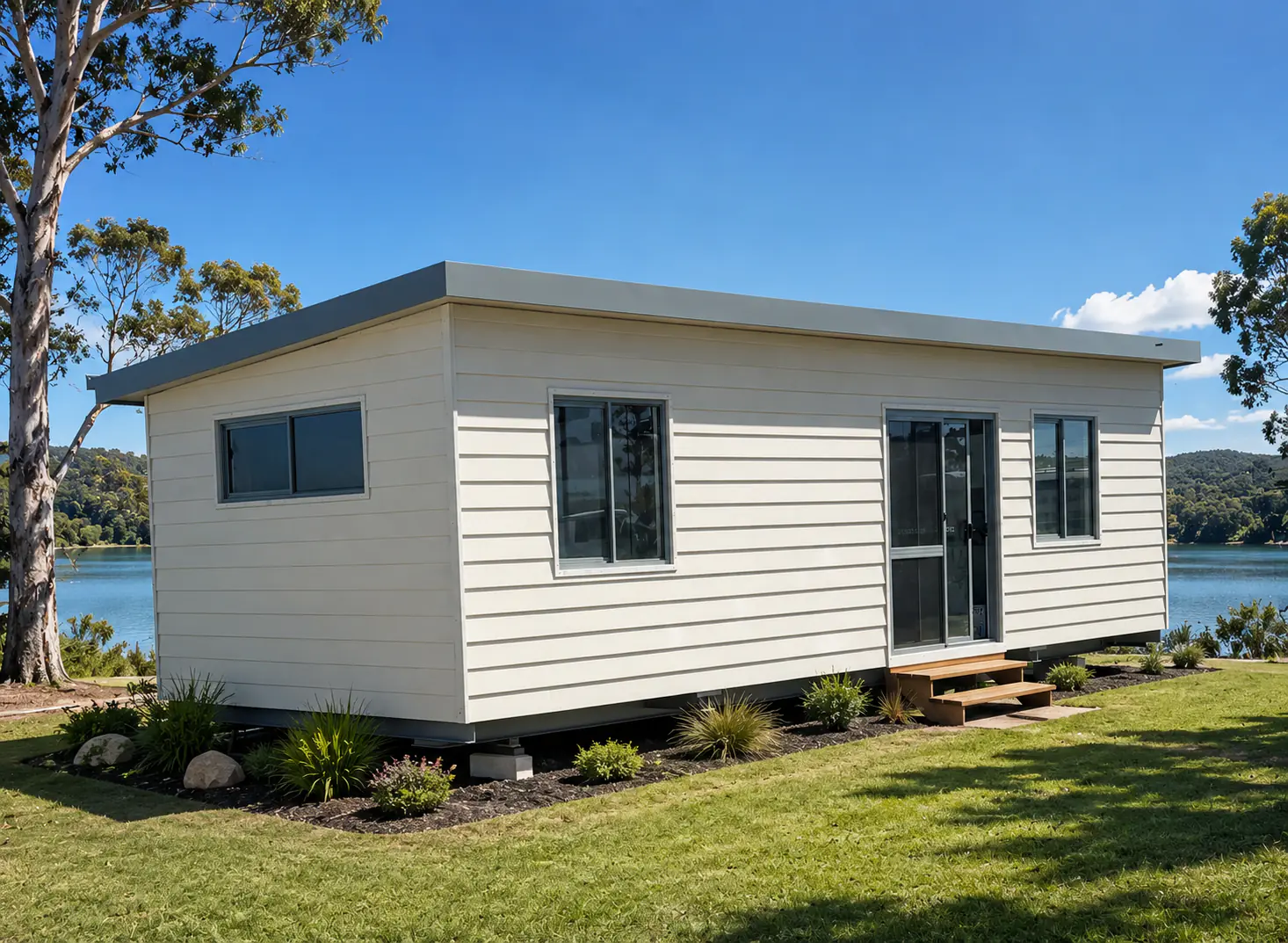
Auswest Modular Homes is proud to offer many choices, ranging from 1 to 4 bedroom options and various upgrades and opportunities for customisation. All of our Class 1A modular homes are built off-site in Western Australia.
We offer several floor plans, each with transparent pricing.
Our basic 1-bedroom home, with 38 square metres of living space, starts at $99,000.
Our largest floor plan includes four bedrooms, two full bathrooms, and 158 square metres of living space at $345,000.
When comparing Auswest Modular Home prices, please remember that the advertised price does not represent the total cost of completing your home on your property. You will need to add transport, site preparation, foundations, connections, approvals, and other site-specific expenses to your total budget.
Always confirm the current price and inclusions directly with the friendly staff at Auswest Modular Homes, as prices and specifics can change.
What Do Auswest Modular Homes Include as Standard?
We are proud to offer high-quality modular homes with EPS construction, compressed fibre cement flooring (not chipboard), custom kitchen cabinets, and more:
- Split-system air conditioning
- Architraves
- Skirting boards
- Tiled showers
- Lighting
- Tapware
We also include a certificate of compliance, so you can have peace of mind knowing your new modular home meets all Australian standards.
Optional Upgrades that Can Affect the Final Price
We also have a wide range of upgrades you can choose to make your new home as customised as you like, including:
- Ceiling fans
- Double-glazed windows
- Island bench
- Stone benchtops
- 6.6 KW solar panels
- Patio
- Additional split air conditioning unit
- Plan amendments
- Carpeted bedrooms
- Electrical upgrades
- Gas upgrades
Don’t forget to include transportation costs, cranage, site prep, and the other items mentioned above.
Request a Quote from Auswest Modular Homes
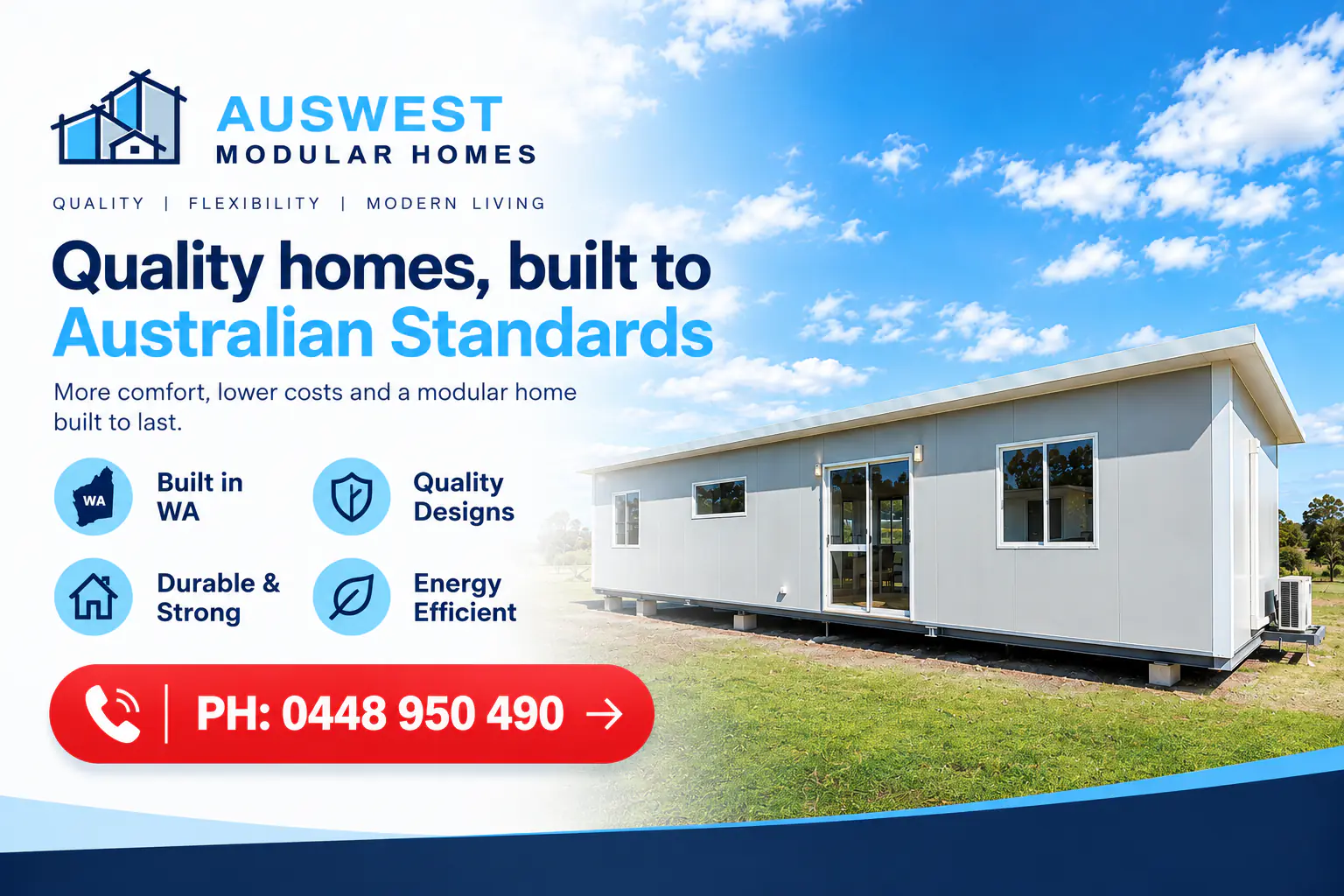
Our friendly staff will be happy to speak with you about your dream home and how to make it real.
Got questions about sustainability? We offer expert guidance to help you through the rough spots, whether you want to know the benefits of a modular home, what site costs you may encounter, what colour options are available, or other questions.
Why not start the ball rolling with a quote from Auswest Modular Homes? Call us today, and with our expert help, you will have fewer surprises and get to enjoy your new home more than you imagined.
Call Auswest Modular Homes today!